Trucker Babe

Topic
Interface Design II
Team
Johanna Schopf, Lea Voith
Supervision
Prof. Carmen Hartmann-Menzel
Grade
1,0
Long-haul drivers face a fragmented work environment: time pressure, strict driving regulations, analog documents, outdated systems and an increasing lack of suitable parking spaces. These constraints make everyday decisions stressful, especially route planning and planning of driving and rest breaks.
Design an integrated in-cab system that helps drivers plan routes, find parking, manage documents and keep track of driving and rest times, while remaining safe and easy to operate on the road.
We analyzed the drivers’ daily workflow, visited logistic companies, interviewed stakeholders, examined existing vehicle systems and the tachograph, explored different interaction concepts, built physical and digital prototypes and tested the system with users.
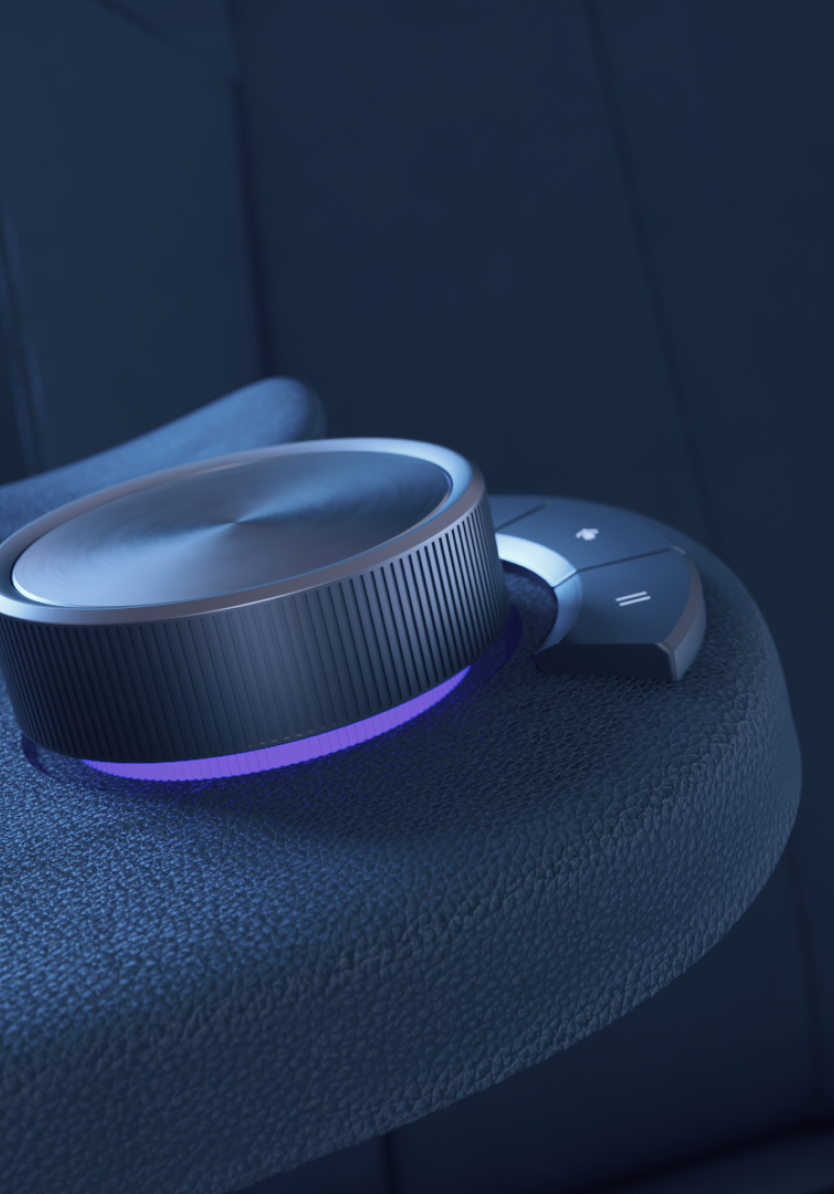
The final result is a functional product vision consisting of a digital interface and a physical control prototype, simulating how TruckMate could be used inside a truck cabin.
There are several well-known systemic and societal issues in the transportation industry that have a negative impact on the professional image of truck drivers. We investigated the causes of these issues.
Increase in goods transport
Bad working conditions
Driver shortage
Outdated technology
Lack of parking spots
For the research, it was essential to analyze the current situation and workflows of truck drivers. For this purpose, we collaborated with a logistics company and its employees, and held insightful discussions with drivers, dispatchers, and transportation and logistics experts.
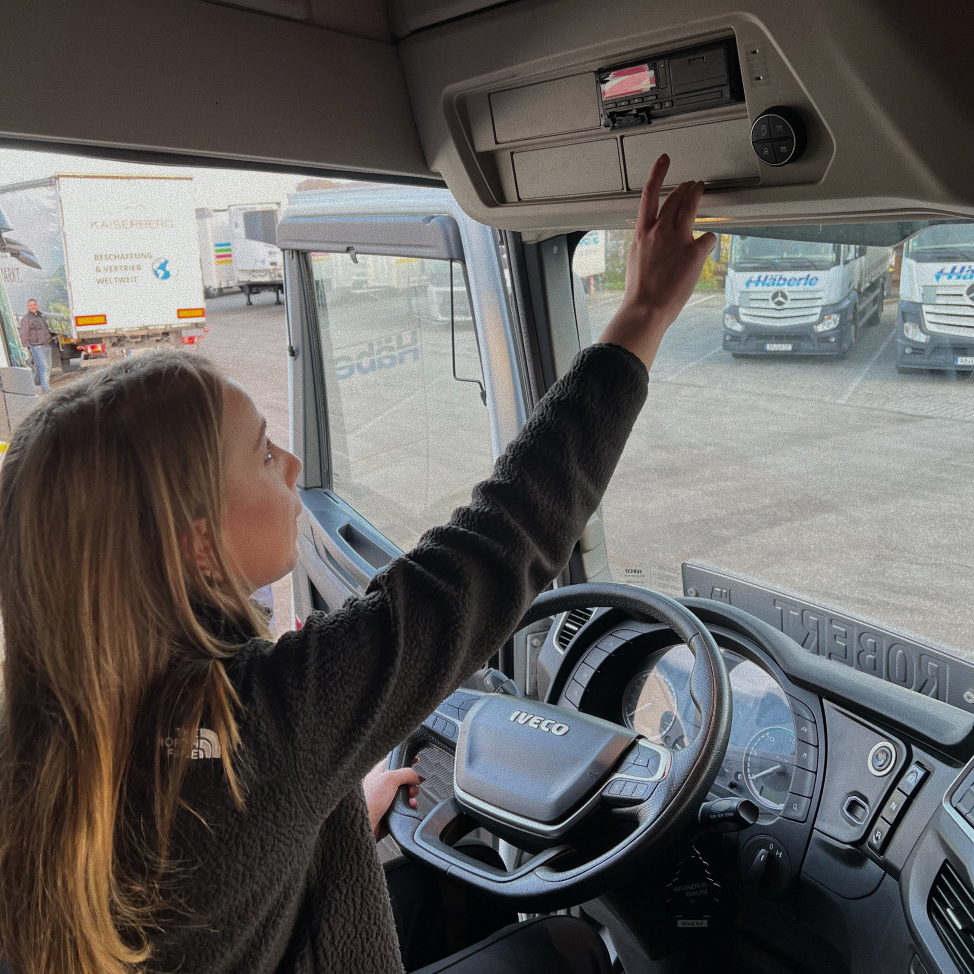
We analyzed the workstations of dispatchers and drivers, paper-based documents, and driver systems across the entire logistics company.
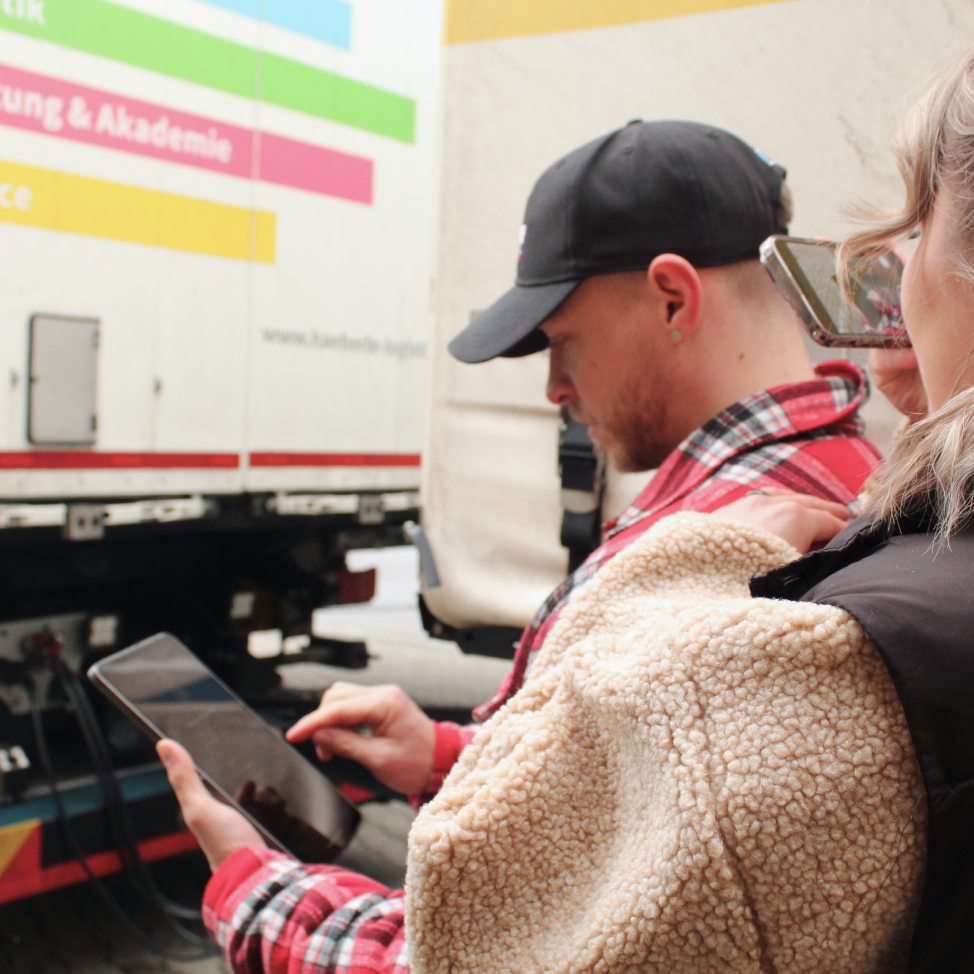
It was particularly insightful to observe the drivers as they went about their daily tasks and ask them about their experiences and pain points.
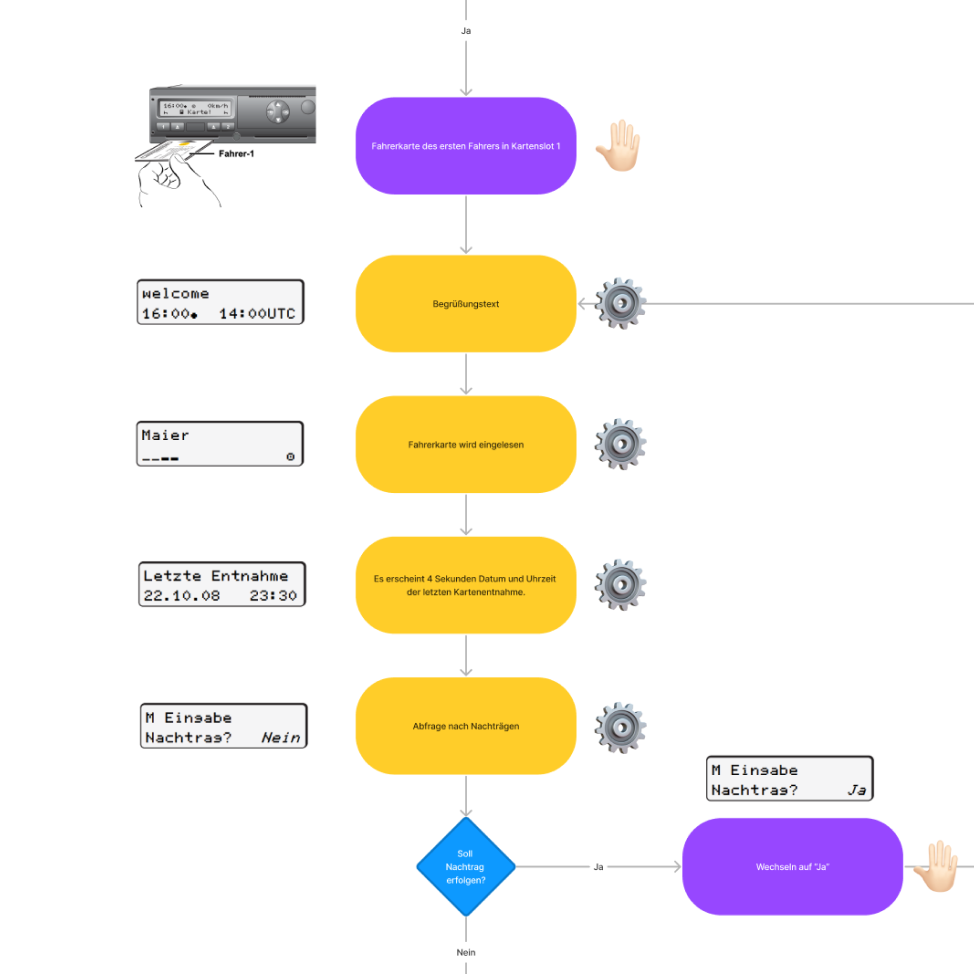
Processes, workflows, and interaction principles were meticulously mapped to identify weaknesses and opportunities.
The analysis gave us some insights into our users' problems, their needs, and the potential of our interface. For example, it became clear that we need a portable system, since tasks are performed both inside and outside the driver's cab, and that tracking driving and break times, communication, and finding parking spaces are key priorities.
Method
Description
Prio
Solution
Observation
Problem
Combine all systems into one
Observation
Problem
Replace and integrate the tachograph
Interviews
Problem
Digitize paper documents
Testing
Potential
Offer a different control method while driving
Interviews
Potential
Offer a different control method while driving
Interviews
Problem
Always display the remaining travel time clearly
Testing
Potential
Keep physcial buttons
Testing
Potential
Simplify current screens for more focus
Interviews
Problem
System has to make suggestions
Observation
Potential
System has to be portable and detachable
Interviews
Problem
Feature for calling and messaging has to be included
Testing
Problem
Hierarchy needs to be simplified
Testing
Problem
Hierarchy needs to be simplified
Testing
Problem
Hierarchy needs to be simplified
Testing
Problem
Hierarchy needs to be simplified
Testing
Problem
Hierarchy needs to be simplified

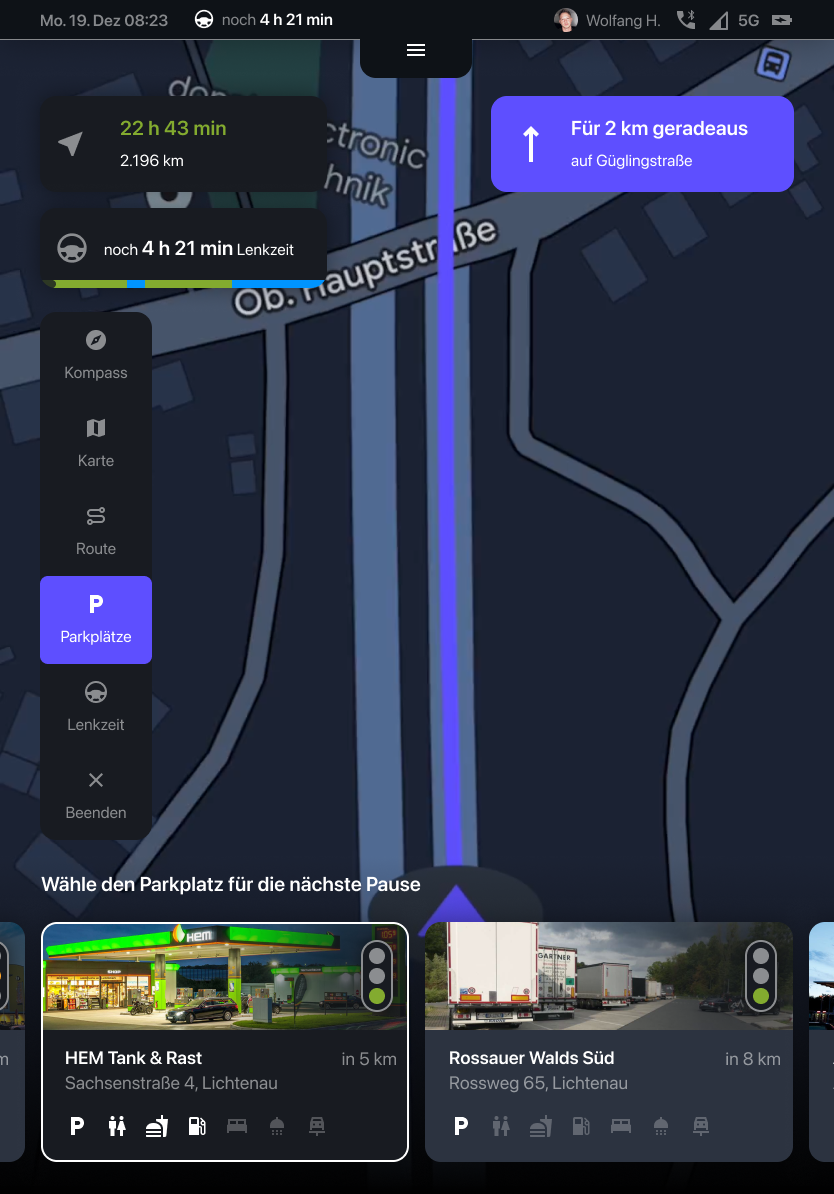
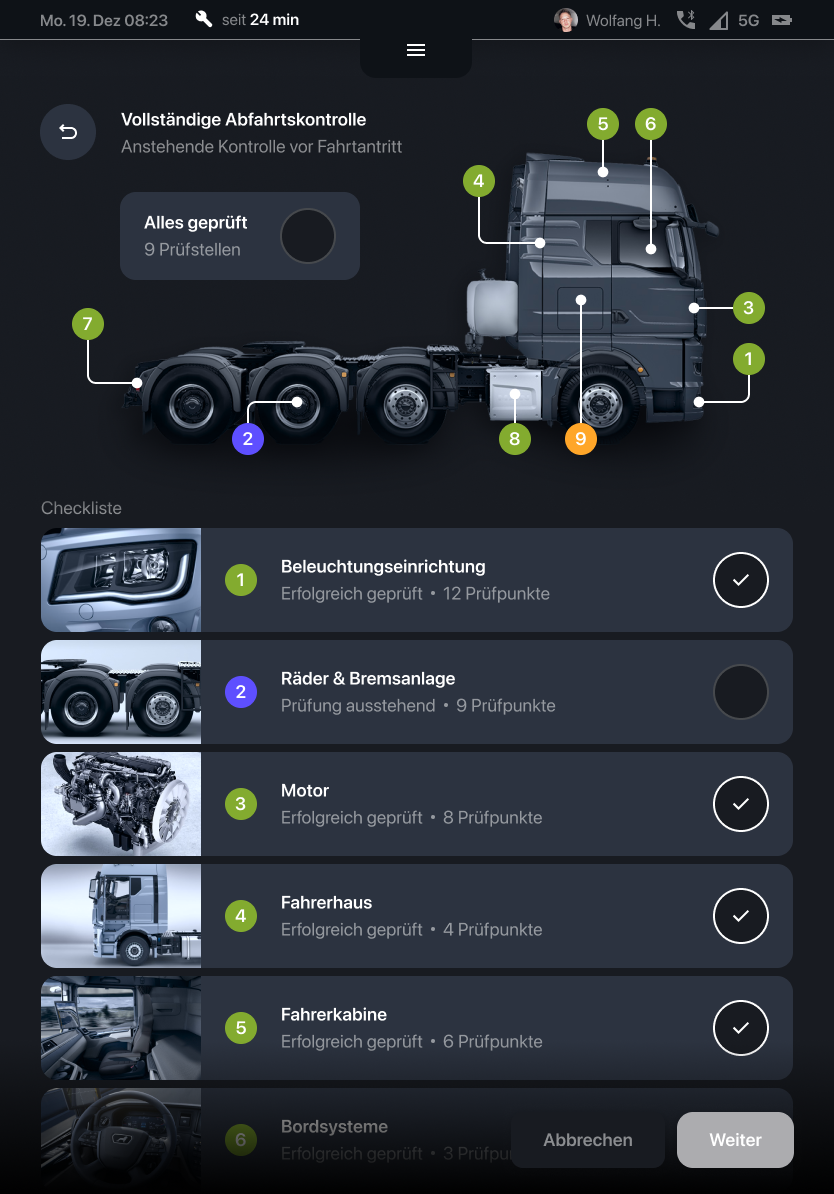
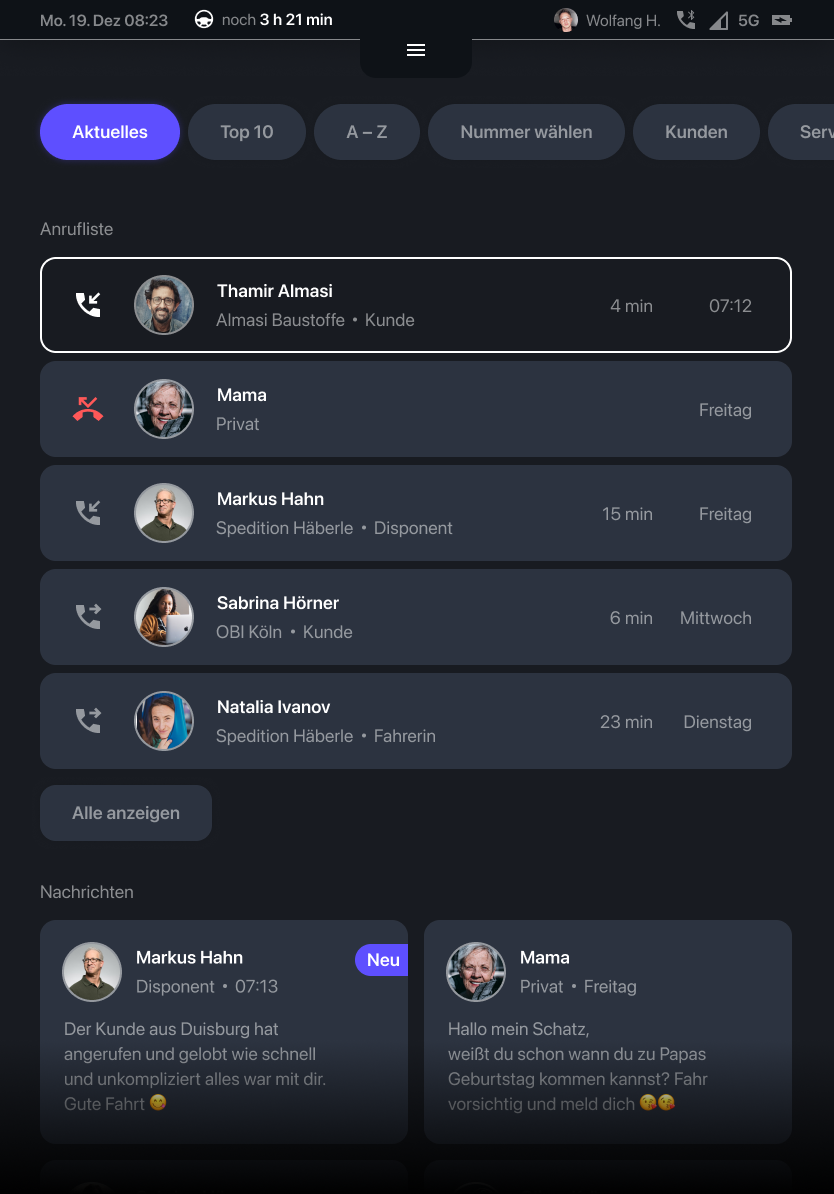
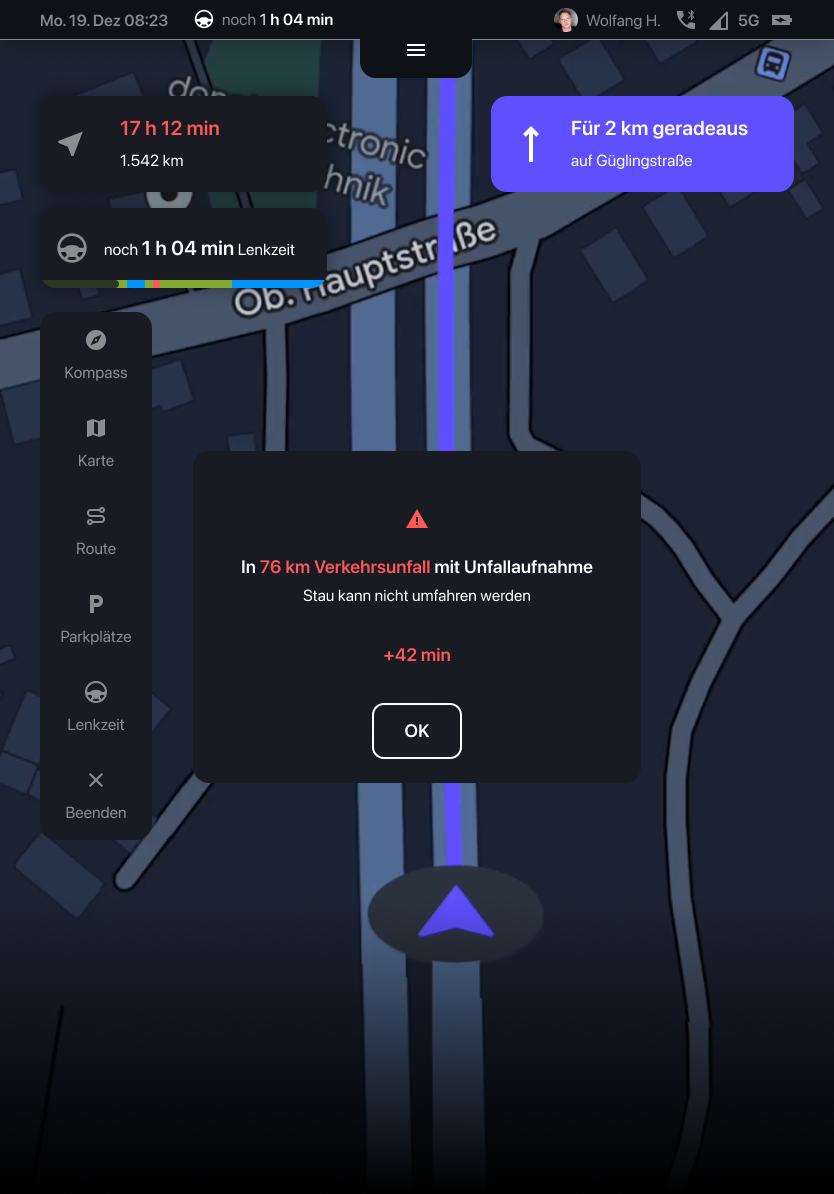
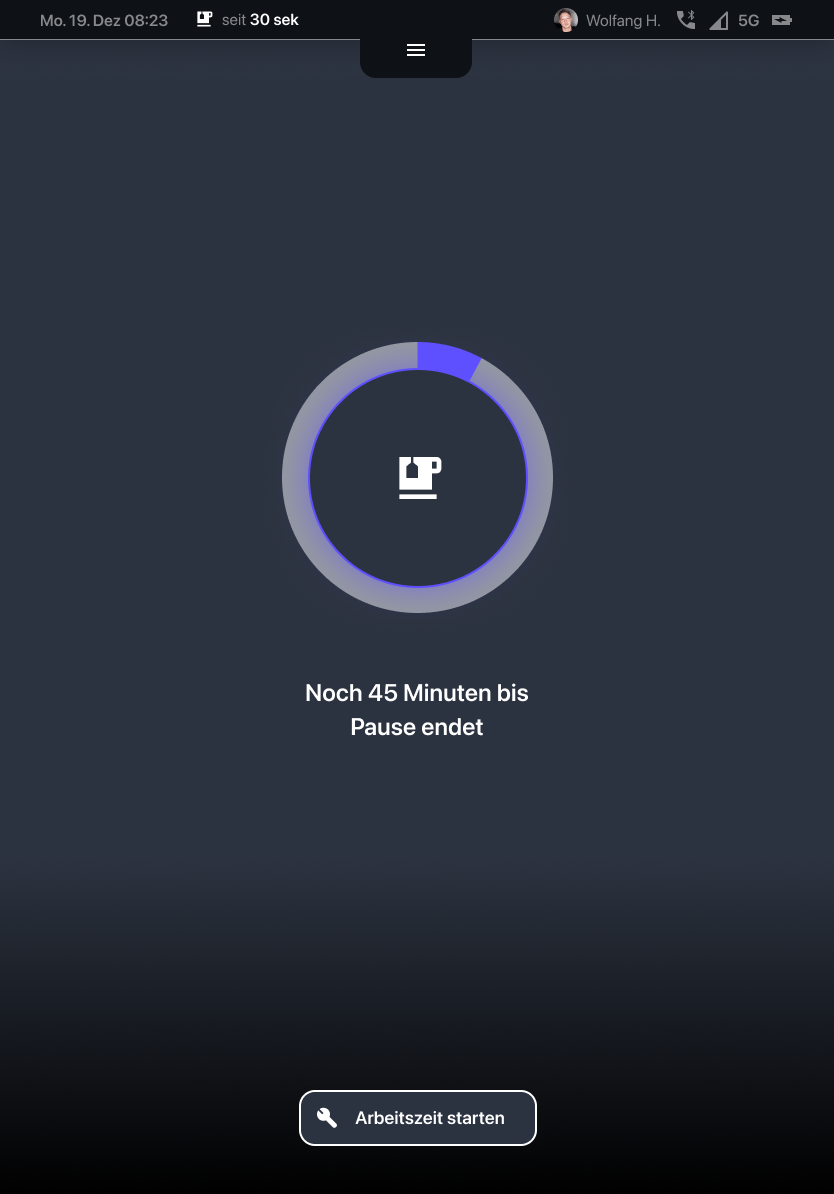

The design focused on making relevant information easy to understand quickly and keeping the current task front and center. This works well in a vehicle setting because it minimizes unnecessary distractions.



The main menu uses large, alternating cards that are scrolled horizontally using the rotary/push button. This creates a clear overview, a sense of focus, and a direct link between physical controls and the interface.
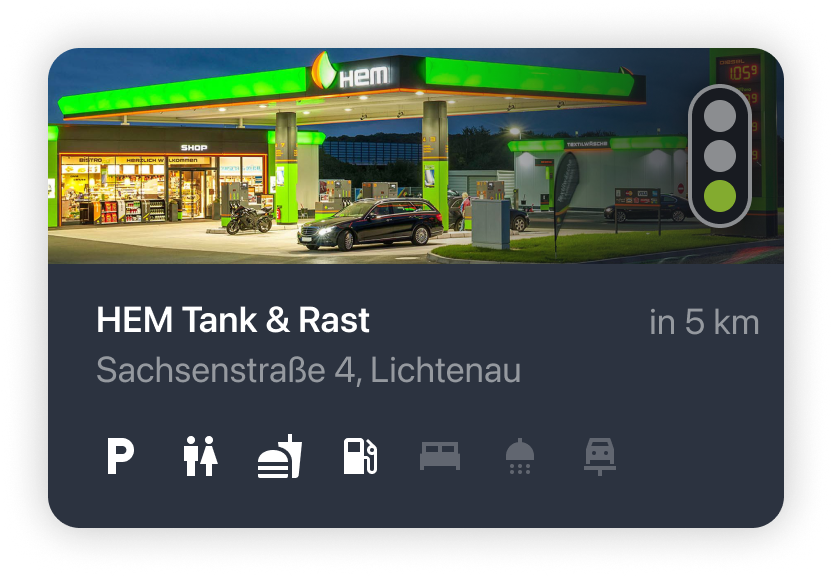
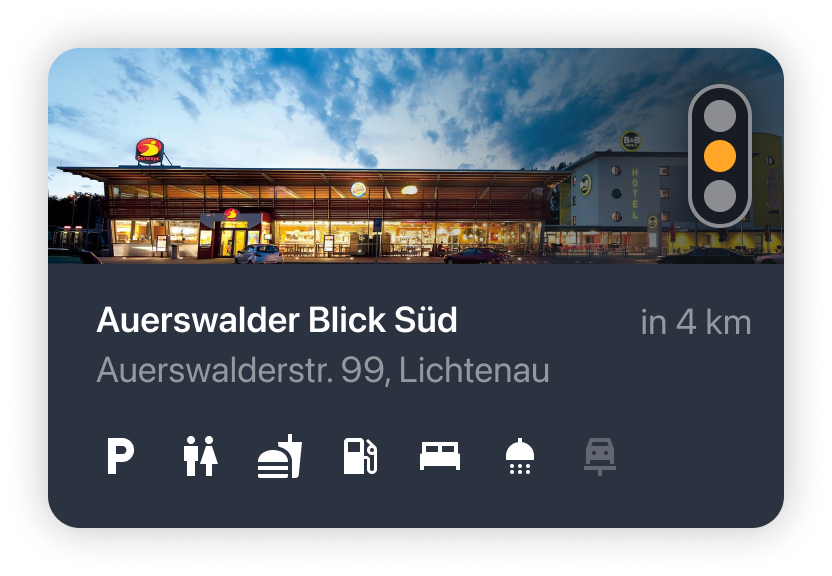
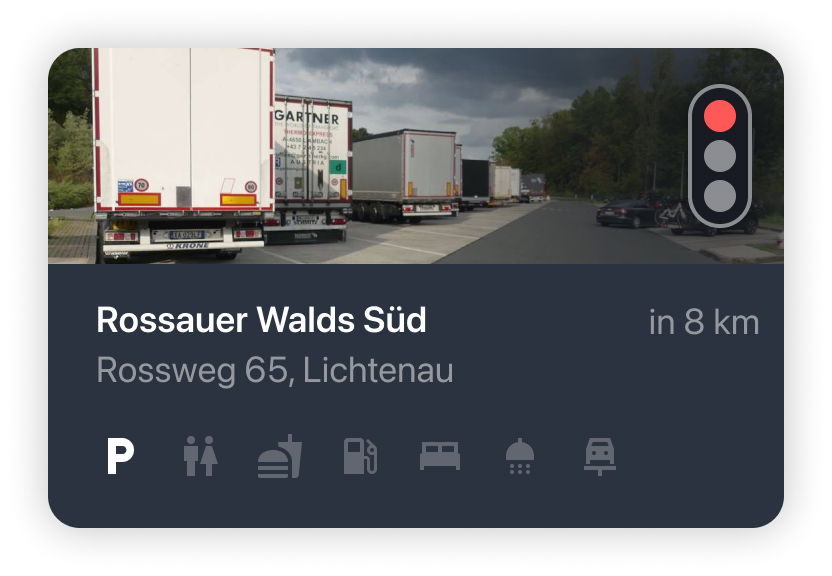
The availability of parking spaces is particularly important to drivers. That is why a simple traffic-light system was developed to make the expected parking situation easy to understand and compare.
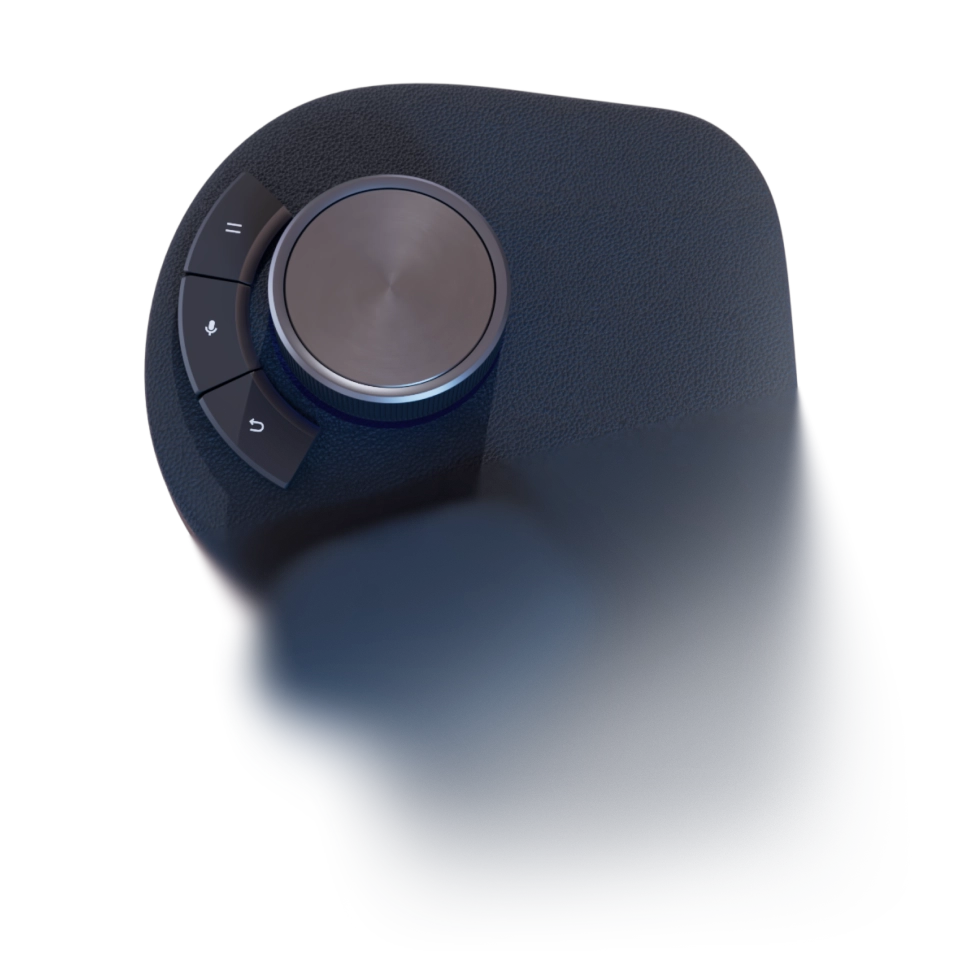
The armrest, featuring a rotary encoder and three switches, brings the TruckMate product vision to life, making it tangible and testable. The physical control concept allows for safe operation of the system even while driving and over long control distances within a truck cockpit.